Publications
Reports &
Articles
LEKSHMAN RAJ
(Classical Dancer and Movement Researcher)
Movement Vocabulary and Nature: The Ecological Architecture of Human Movement
Human movement did not emerge in isolation from nature. Long before choreography became codified into performance systems, the human body evolved through continuous interaction with ecological environments. Walking, crawling, bending, leaping, balancing, rotating, and rhythmic repetition were originally adaptive responses to landscapes, animals, weather systems, gravity, and survival conditions.

LEKSHMAN RAJ, Ms. Omisha Sangeet
Student & Assistant professor, Department of Applied Psychology University of Delhi
‘Cognitive Dissonance in Sustainability and the Role of Anthropocentrism in Environmental Perception’
The Silent Conflict Within Human Behaviour In the contemporary world, environmental degradation is no longer an abstract or distant concern. From declining biodiversity and habitat fragmentation to excessive resource extraction and pollution, the ecological crisis is widely acknowledged across disciplines. Scientific institutions, environmental policies, and global frameworks repeatedly emphasize sustainability as a necessary pathway forward. Yet, despite this widespread awareness, a striking contradiction persists,human behaviour continues to contradict environmental knowledge.
Garima Mahavra
Garima Mahavra | Member, Research & Ideation Team, C-Cube
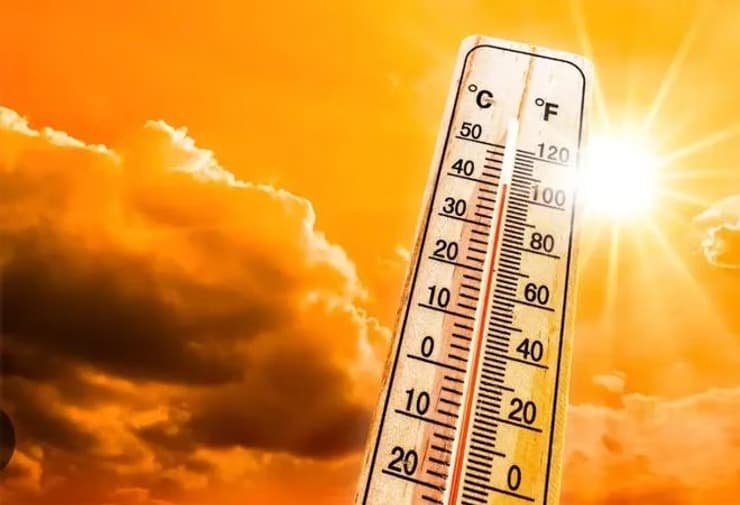
Heatwaves in India: A Warning Sign for Our Present and Our Future
When Summer Arrives Too Soon In 2026 India witnessed an unusually early and intense heatwave season. Temperatures in several regions were reported to be 4 to 8 degrees Celsius above the seasonal average, according to the India Meteorological Department. These conditions appeared as early as March, suggesting that what used to be peak summer weather is now arriving weeks earlier than expected.
Abhishek Panwar
Member, C-Cube | Climate Cadets Collective
When the World's Largest Economy Walks Away from Climate Responsibility
Exiting IPCC and UNFCCC signals a retreat from climate accountability, with far-reaching consequences for science, diplomacy, and global cooperation


Lekshman Raj
Member, C-Cube
THE UNTOLD WORLD OF LEPIDOPTERA
Have you ever paused to wonder about the butterflies fluttering around your garden or the silent moth resting beneath a flickering bulb? It might surprise many readers or students to know that there are actual degree courses that focus entirely on studying these delicate creatures. What once seemed like a childish curiosity, the act of chasing butterflies or observing insects has become a door to scientific exploration and discovery. I still remember getting scolded by my parents for running after insects with a jar in hand, and today, here I am, learning about them professionally. It’s a journey that began with wonder and continues with purpose.

Aditya Rustagi, Sameer Tiwari, Yashashwi, Prajjwal, Nithila, Sudhanshu, Prince Sant
Contributors
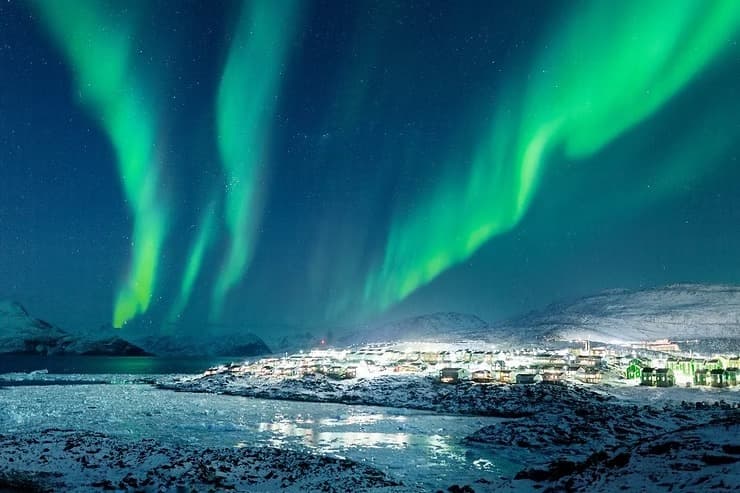
Greenland's Climate Crossroads: Unraveling the Rapid Shifts and Global Echoes of a Changing Arctic
The melting ice in Greenland is a warning sign for all of us. Scientists are studying these changes to understand what might happen next. Engineers are also looking for ways to harness the power of these massive glacial floods for renewable energy. Meanwhile, Greenland’s biodiversity is facing new challenges as habitats disappear and species struggle to adapt. The negative consequences of ice loss, from rising sea levels to disrupted climate systems, highlight the urgency of addressing climate change. While there may be some opportunities in adapting to these changes, the focus must remain on preventing further damage and protecting our planet for future generations. It's a story of ice, opportunity, and change. And it's a story that affects all of us. As we watch Greenland, let's remember that its future is tied to our own.
Vaishnavi Verma
Author
ENVISTATs 2025 : Summary
Subcomponent 1.1 Physical Conditions Physical changes in environment slowly due to human activities Statement 1.01 The annual mean temperature shows a gradual upward trend, increasing from 25.05°C in 2001 to 25.74°C in 2024, reflecting overall warming across India. Both 2023 and 2024 reflect record-breaking seasonal heat, signaling intensifying climate impacts. Statement 1.02 The data from 2001 to 2024 shows a consistent rise in both annual minimum (2001: 19.32°C to 2024: 20.24°C) and maximum temperatures (2001: 30.78°C to 2024: 31.25°C) across India, indicating a clear warming trend. Diurnal temperature range (difference between max and min) is narrowing, especially in recent years, possibly affecting agriculture and human health. The year 2022 stands out as one of the hottest years, followed closely by 2023 and 2024.

Vaishnavi Verma
Founder & President | C-Cube
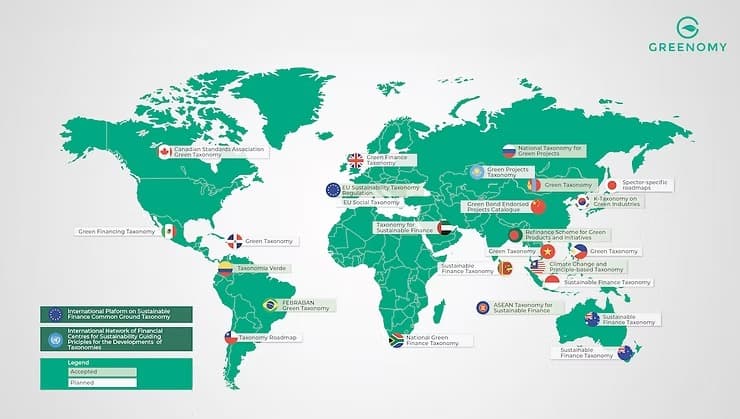
Funding for Existence: A Broader View of Green Taxonomy in India
Does Green Taxonomy Mean More Tax Impositions? No! Green Taxonomy is just a system for the identification and classification of information. According to the IPSF (International Platform on Sustainable Finance) Taxonomy Working Group, co-chaired by the European Union and China, "a ‘green’ or ‘sustainable’ taxonomy is a classification system that identifies activities, assets or revenue segments that deliver on key environmental objectives based on the eligible conditions set out by the taxonomy.